How Amazon Sellers Get Product Liability Insurance Fast
What Product Liability Insurance for Amazon Sellers Covers,Which Product Liability Policy Fits Amazon Sellers Best,How Amazon Sellers Get Product Liability Insurance Fast,Complete Product Liability Insurance for Amazon Sellers,Is Product Liability Insurance for Amazon Sellers Required?
Why Amazon Sellers Need Product Liability Insurance
I learned this the hard way after a buyer’s attorney called about a kettle that scalded her hand: I was the collectible target, not the factory in Shenzhen I had never visited. That is the heart of product liability insurance for Amazon sellers, because your brand sits on the listing. A complete product liability insurance guide walks through this machinery before you sign anything.
Table of Content
In most claims the injured buyer never contacts you first. They call Amazon, a state consumer-protection office, or a plaintiff’s attorney who pulls the listing, the brand registry record, and your seller name in one afternoon. That paper trail finishes at your door, not your supplier’s warehouse.

What Amazon Actually Demands From Sellers
Amazon’s trigger is specific rather than arbitrary: cross $10,000 in monthly sales for three consecutive months and proof of insurance becomes mandatory under the Business Solutions Agreement. The certificate must show $1,000,000 per occurrence and $1,000,000 in the aggregate, include products and completed operations, and name Amazon as an additional insured.
Two clauses trip up sellers constantly. Your deductible cannot exceed $10,000, and the issuing carrier has to hold an A.M. Best rating of A- or better. Policies also need to give Amazon 30 days’ written notice before cancellation, which quietly eliminates stripped-down binders from carriers nobody outside the industry recognizes.
How a Customer Claim Reaches You
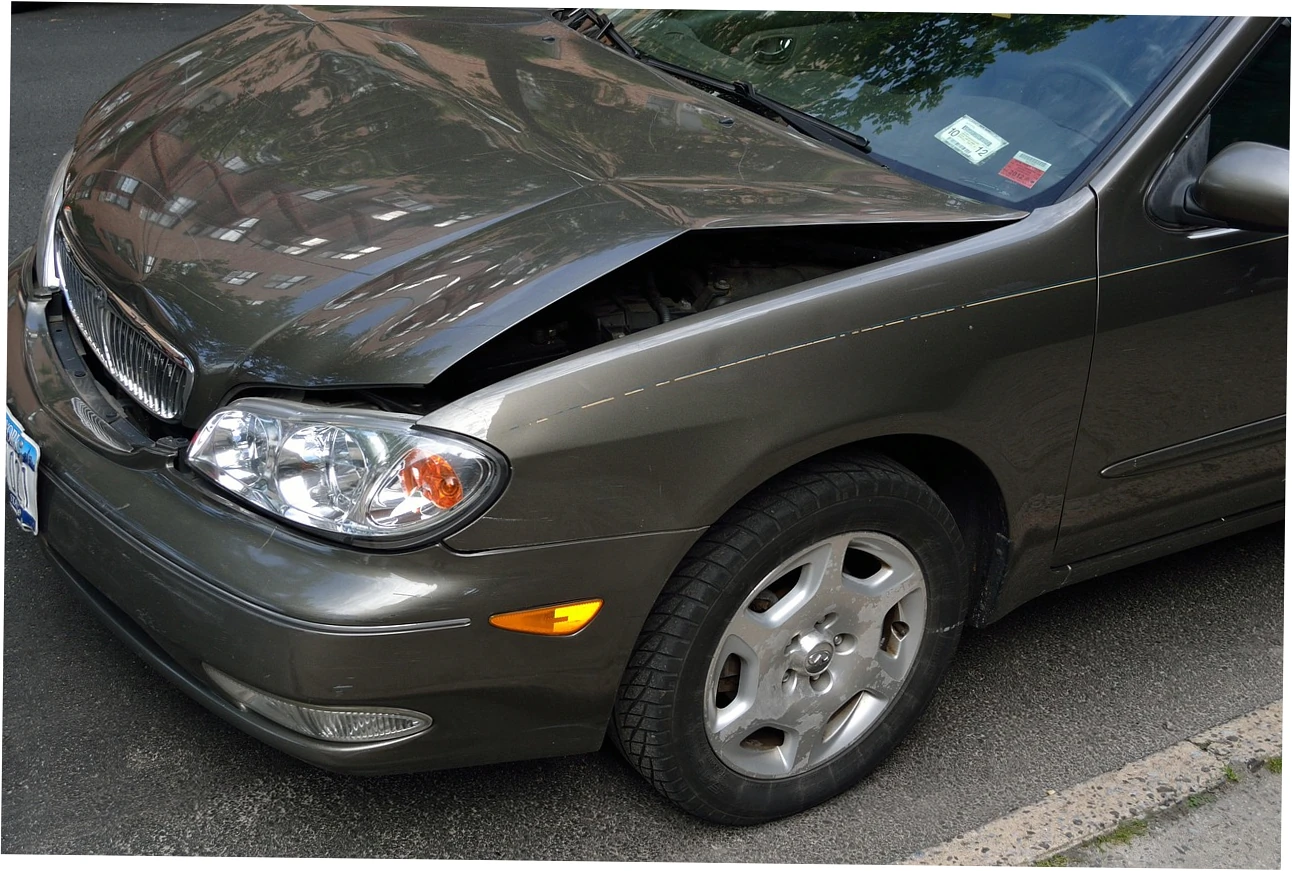
A seller I worked with received a demand letter nineteen months after a folding step stool buckled under a 240-pound buyer. The filing named the seller, Amazon, and the overseas factory at once. Her general liability policy responded because products-completed operations coverage was attached, and the carrier absorbed defense costs that would have passed $40,000 before trial.
What Policy Limits Do Amazon Sellers Need
Limits read simply on a one-page certificate and behave very differently once a real person is injured. Before comparing premiums, understand what each number actually buys, because the cheapest technically compliant policy is often the one that fights your claim hardest when it matters most.
The $1 Million Requirement, Decoded
Per-occurrence and aggregate limits are not interchangeable. The first caps what one injured buyer can recover, while the second caps everything the policy pays across a twelve-month term. A single severe burn or choking incident can drain a $1,000,000 aggregate, leaving nothing for the next claimant who arrives three months later.
Underwriters price limits against your revenue and product category rather than loyalty. A seller moving about $1 million annually commonly pays $600 to $900 for a combined general and products liability program, and trimming a $3 million aggregate down to $1 million at renewal is one of the most frequent cost reductions sellers make.

Additional Insured and Umbrella Clauses
Blanket additional insured wording matters more than most sellers realize, because it lets Amazon draw on your policy directly when a buyer sues both of you and settle without waiting for your approval. Umbrella or excess layers sit above the primary policy and become relevant once revenue passes roughly $2 million.
| Requirement | Amazon’s stated standard | What sellers report in practice |
|---|---|---|
| Sales threshold | $10,000 in monthly sales for three consecutive months | Requests sometimes arrive below that figure, and enforcement varies widely |
| Liability limits | $1M per occurrence and $1M aggregate, including products and completed operations | Many sellers trim a $3M aggregate to $1M at renewal to cut premium |
| Additional insured | Amazon must be named on the certificate | Agents usually add it at no charge through blanket wording |
| Deductible | No more than $10,000 | Higher-deductible policies are rejected during document review |
| Annual cost | Not published | Roughly 0.1%–0.2% of gross sales; $500 for low-risk goods, $10,000 for batteries |
Which Insurer Fits Your Amazon Business Best
Choosing a carrier takes longer than choosing a product, and the spread between quotes for identical coverage is genuinely startling. Here is how the realistic options compare, and why one seller pays $500 a year for a policy their competitor buys for $4,000.
Amazon’s Recommended Programs vs Brokers
Amazon’s partner programs are the fastest route to a compliant certificate: pricing tracks your estimated annual sales, and sellers around $100,000 in volume often see quotes near $22.50 a month. Coverage for small business sellers arranged through an independent broker frequently beats that price once revenue passes $250,000, because those programs underwrite your product category instead of your turnover alone.
The friction point is familiarity. Plenty of local agents have never written a policy for a third-party marketplace seller, and some decline the risk outright rather than refer you to an underwriter who understands products-completed operations, recall exclusions, and overseas supplier certificates.
When Your Current Policy Already Qualifies
If you already carry a commercial general liability policy for your warehouse or office, you may be one endorsement away from compliance. Email your agent the requirements sheet, add products-completed operations coverage, name Amazon as an additional insured, and request the certificate. Sellers regularly report this costs nothing extra because the underlying policy already contemplated product exposure.
| Channel | Typical annual cost | Strengths | Watch-outs |
|---|---|---|---|
| Amazon-recommended program | $250–$1,500 | Fast approval and an Amazon-ready certificate | Pricing tracks estimated sales; narrow category appetite |
| Independent business broker | $500–$4,000 | Access to specialty carriers and negotiated classifications | Slower quotes and inconsistent expertise |
| Endorsement on an existing CGL policy | Often $0 extra | No duplicate premium for coverage you already own | Requires products-completed operations wording |
| Specialty high-risk market | $5,000–$15,000 | Insures cosmetics, batteries, and ingestibles | Higher deductibles and stricter exclusions |
Mistakes That Sink Amazon Sellers’ Insurance Claims
Almost every denial traces back to something signed without reading or to a product category no mainstream carrier wants. Both problems are fixable before a claim ever lands on your desk, and both are cheaper to fix than to litigate.
Exclusions That Quietly Void Coverage
The costliest assumption in this business is that your supplier’s insurance protects you. It does not unless you are named on that policy, and a factory policy written overseas is rarely enforceable in a US court. Product liability for importers has to be built around your own name on the listing, plus indemnity language and a current certificate from every factory you buy from.
Read the exclusions page before the premium page. Standard forms exclude recall and repair costs, mold, professional advice, and losses tied to products you modified after receiving them. Repackaging goods with your own inserts or bundling two items together can move an otherwise covered claim outside the policy without anyone telling you.
High-Risk Products: Cosmetics, Batteries, Kids’ Goods
Underwriters treat skincare and makeup as a different animal. An allergic reaction can surface weeks after delivery and often arrives as a cluster of claims from a single batch. Liability coverage for cosmetics brands has to answer adverse-reaction allegations and increasing regulatory scrutiny, which is exactly why generic marketplace policies exclude them.
Lithium-ion batteries sit at the far end of the appetite spectrum. Sellers of small electronics report quotes above $10,000 a year, and several large carriers decline outright. Children’s goods attract similar scrutiny: choking hazards, CPSIA testing obligations, and toys marketed above their intended age range all raise premiums and shrink the list of willing insurers.
| Product category | Carrier appetite | Typical premium | Common coverage pitfall |
|---|---|---|---|
| Tools and home goods | Strong | $400–$900 | Claims tied to products altered after receipt |
| Cosmetics and skincare | Selective | $2,500–$8,000 | Adverse-reaction claims excluded on generic forms |
| Children’s products | Selective | $3,000–$10,000 | Age-grading and CPSIA documentation requirements |
| Electronics with lithium batteries | Very limited | $6,000–$15,000 | Fire losses sub-limited or excluded |
| Supplements and ingestibles | Very limited | $8,000 | Ingestion exclusions and regulatory claims |
Getting Covered Without Overpaying Every Year
Compliance is a deadline problem more than a knowledge problem. Amazon gives you a fixed window to upload a certificate, and the clock starts the day the email lands in your inbox, not the day you get around to reading it.
A 48-Hour Coverage Action Plan
Start inside Seller Central and download the current requirement page instead of relying on a screenshot from a forum thread. Email your existing agent that page, request quotes from one Amazon-recognized provider and one independent broker, then compare aggregate limits, deductibles, and exclusions side by side rather than comparing monthly premiums alone.
State your estimated sales honestly. Inflated figures raise premiums, but understated ones invite a mid-term audit, an adjusted bill, and, at worst, a rescission argument after a claim. If a quote exceeds $5,000, ask which line item drives it before abandoning the carrier. Amazon revises these rules periodically, so verify the wording yourself.
Who to Call When Something Goes Wrong
Report every injury complaint to your carrier immediately, even when it sounds frivolous, because notice provisions are strict and late reporting is a legitimate denial ground. Preserve the listing, order record, supplier certificates, and test reports. Our support desk reviews certificates of insurance at no charge, so send yours over before paying for a policy you may already own.
Questions Amazon Sellers Ask About Coverage
Do I need product liability insurance if I only resell another brand’s product?
Yes, if you are the seller of record. The A-to-z Guarantee can reimburse eligible injury claims up to $1,000,000, but Amazon may pursue recovery from you afterward, and plaintiffs routinely name every party in the chain. Reselling does not transfer the legal exposure that attaches to whoever listed the item.
How much does product liability insurance cost for Amazon sellers?
Expect roughly 0.1% to 0.2% of gross sales for low-risk goods, which lands many sellers between $400 and $900 a year. Cosmetics, ingestibles, children’s products, and anything containing a lithium battery push quotes into the thousands, and some categories are declined entirely by mainstream carriers.
Will Amazon accept the general liability policy I already have?
Often yes, if it includes products-completed operations coverage, a deductible of $10,000 or less, 30-day cancellation notice, an A.M. Best rating of A- or better, and Amazon named as an additional insured. Ask your agent for the certificate and upload it rather than buying a second policy.
What happens if I ignore the insurance request email?
Amazon can suspend listings and hold disbursements until a compliant certificate is uploaded. Enforcement is uneven, and some sellers limp along uninsured for years, but betting a storefront on inconsistent enforcement is a poor trade when a compliant policy costs a few hundred dollars.
Does selling cosmetics or battery-powered electronics change my coverage needs?
Substantially. Those categories carry class codes and exclusion language that generic marketplace forms handle poorly, so claims involving allergic reactions, fires, or ingestion can be denied even when the certificate looks compliant. Specialty markets exist for them, but they price the risk accordingly.
Can I just buy the cheapest policy that satisfies Amazon?
You can, and plenty of sellers do. The risk is that a minimum-premium policy excludes the exact peril that generates your claim, carries a $10,000 deductible, or sub-limits defense costs. Compare the exclusions page and defense terms, not just the monthly number, before you bind.